
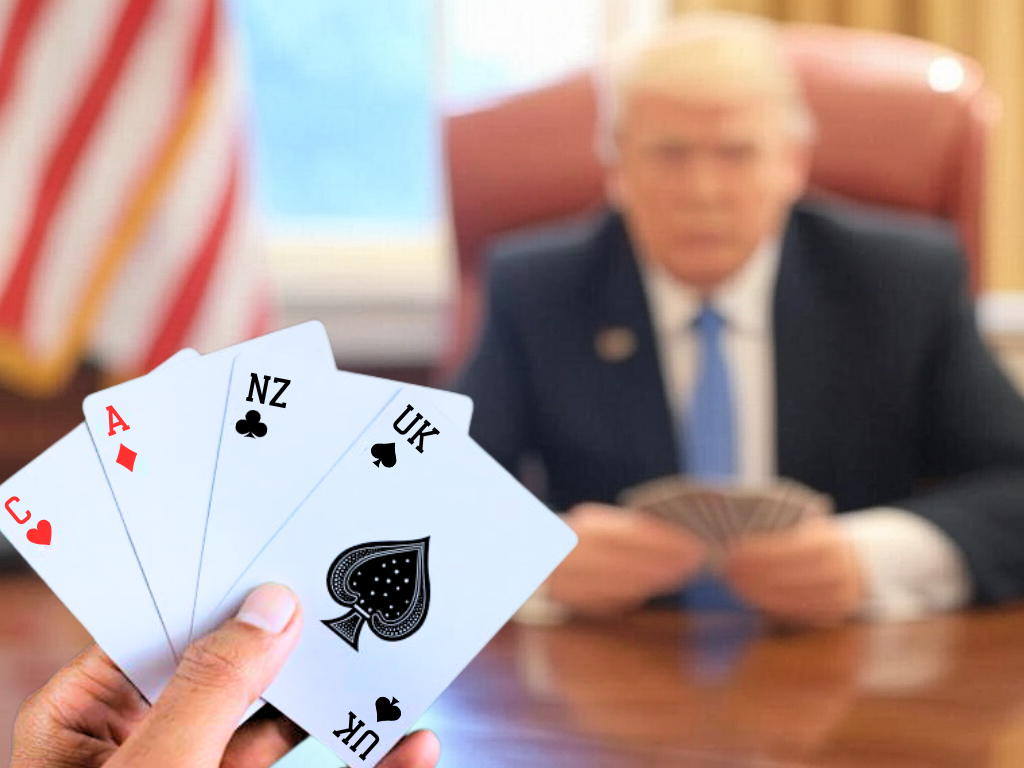

Last month, the world watched in disbelief as Trump clashed with Zelenskyy in a tense Oval Office exchange. Now, after slapping tariffs on countries worldwide, one particular remark from Trump lingers in the air: "You don’t have the cards” he said, “with us, you have the cards". But what cards does Britain hold? Well, it may just have an ace hidden up its sleeve- a bold and daring vision called CANZUK...
On April 2, 2025, the United States implemented a sweeping tariff regime under President Trump’s ‘liberation day’ policy- a 10% baseline tariff on all imports, 20% on goods from the European Union, along with a 25% tariff on steel, aluminium and cars. This unilateral protectionism has upended decades of economic interdependence, exposing the fragility of reliance on the US as a trade partner. For Britain, the moment is ripe to lead the formation of CANZUK, a unified bloc of Canada, Australia, New Zealand, and the UK, as the definitive alternative to American volatility. CANZUK must become the cornerstone of a new economic and geopolitical strategy, enabling these nations to strengthen trade resilience and negotiate with the EU as a $7 trillion powerhouse, rather than as fragmented entities.
The US tariffs have already inflicted measurable damage across the CANZUK economies, targeting key export sectors. In the UK, over £60 billion a year is exported to the US which will now face a 10% tariff, with a further 25% levy on cars, steel, and aluminium- sectors employing over 300,000 workers. The British Automotive Trade Association reports a 12% drop in US car export orders since tariffs began only last week, threatening £5 billion in revenue losses by year-end. Canada, with 75% of its $578 billion export market tied to the US, suffers acutely from the 25% tariffs on steel and aluminium; the Canadian Chamber of Commerce estimates a $78 billion annual GDP hit. Australia’s $28 billion US trade flow, including $3 billion in steel exports, now faces a 25% tariff, slashing competitiveness; the Australian Industry Group forecasts a 2% GDP contraction if unchecked. New Zealand, though less exposed at $5 billion in US exports, sees its $1.2 billion aluminium sector battered, with export volumes down 18% since tariffs began. These immediate effects underscore the urgency of a coordinated response.
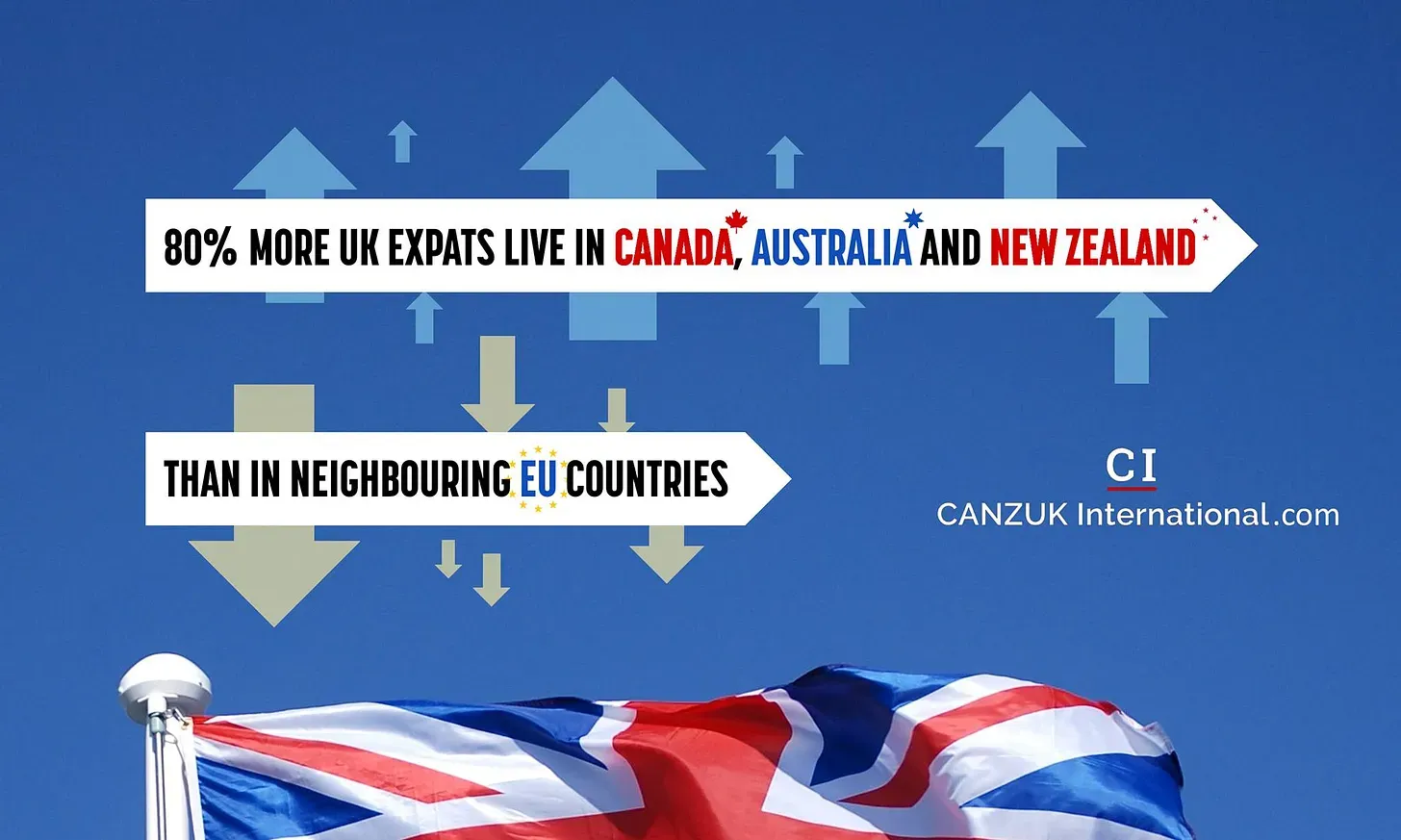
Without this unified strategy, the tariff burden could spiral into a full-scale economic crisis across the CANZUK nations. The UK’s Office for Budget Responsibility projects a 1% GDP loss (£25 billion) by 2026 if trade diversion fails, with manufacturing regions like the Midlands facing a further 50,000 job cuts. Canada risks a recession by mid-2026, with GDP potentially shrinking 2.6% annually as US-bound exports (~80% of its steel and ~70% of its cars) grinds to a halt. Australia’s reliance on commodity exports could see a $15 billion trade deficit by 2027 if China, its largest market, slows further amid global uncertainty, amplifying the US tariff pain. New Zealand’s smaller economy, with a $250 billion GDP, could contract 1.5% as aluminium and dairy exports falter, threatening 10,000 rural jobs. Without CANZUK, these nations face isolated decline, lacking the collective leverage to counter U.S. aggression or secure alternative markets.
Currently CANZUK is not being discussed, and in its place is a peculiar proposal for Canada to join the European Union as a counterweight to U.S. tariffs. This would not only be unfeasible, but frankly inadequate. Geographically, Canada’s transatlantic distance (4,000 miles from Brussels) complicates integration into the EU’s single market, which thrives on proximity and shared borders. Pitching Canada as the plug for the US sized hole isn’t a serious solution, as Canada’s ~$100 billion a year trade with the EU pales in comparison to the US’s $578 billion. Moreover, the EU’s bureaucratic tendencies would likely stifle swift action, whilst CANZUK’s sovereign model offers Canada autonomy and agility, free of supranational overreach- leveraging shared Anglosphere values for rapid, effective trade alignment.
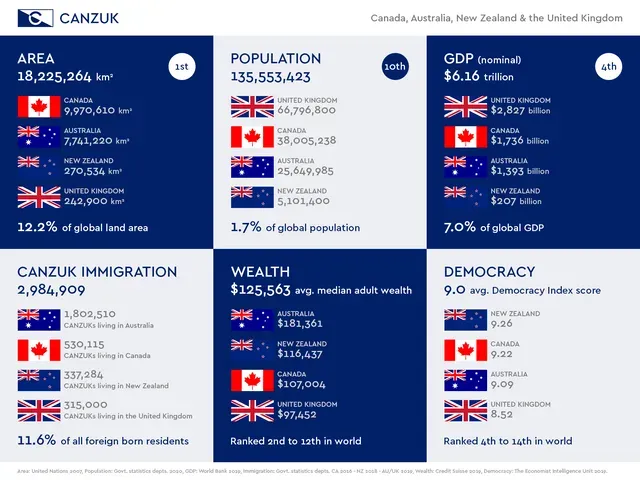
CANZUK’s potential lies in its $7 trillion combined GDP and 135 million population. Its strengths: shared language, legal systems, and democratic values, enable seamless trade and mobility, a model proven successful for Australia and New Zealand with their Trans-Tasman deal, where trade doubled post-1990 when tariffs were made redundant in favour of free trade between the 2 countries. The Commonwealth Trade Review predicts CANZUK’s trade (currently $150 billion annually) could triple by 2030 with zero tariffs and regulatory alignment.
CANZUK aligns squarely with Keir Starmer’s ‘pro-growth’ agenda, with higher taxes so far being Labours only answer to anything, Starmer could seek an export-led recovery, CANZUK’s tariff-free $7 trillion market would offer UK businesses scale to compete globally, boosting GDP growth from 1.1% (2025 forecast) to 2.5% by 2028, per Treasury models. Labour’s industrial strategy of prioritising green tech and manufacturing, finds synergy in Canada’s hydropower, Australia’s lithium, and New Zealand’s agritech- sectors ripe for CANZUK collaboration. Starmer’s pledge to ‘reset’ Britain’s global role gains traction through CANZUK’s diplomatic heft, enhancing trade deals beyond the EU’s £791 billion market. This bloc delivers economic resilience without Brussels’ red tape, fulfilling Labour’s promise of pragmatic prosperity.
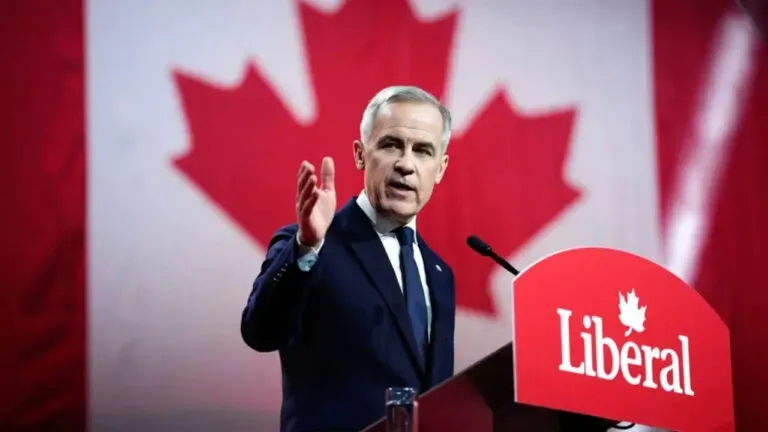
The ascendancy of Labour governments in three of four CANZUK nations, Britain (Keir Starmer, 2024), Canada (Mark Carney, 2025), and Australia (Anthony Albanese, 2022), creates a rare alignment for swift action. New Zealand’s National Party (Christopher Luxon, 2023) also shares Labour’s economic direction, evidenced by its 2024 trade pact with the UK. With aligned governments and over 70% public approval in all 4 nations, CANZUK positions itself as a deliverable deal by 2027.
The US tariffs are not a fleeting disruption but an era-defining structural shift demanding a bold Anglofuturistic vision. Britain must urgently rally CANZUK leaders, targeting a trade and mobility pact by 2026 with a CANZUK-EU trade discussion by 2027. The alternative? Continual subservience to America or the EU- ceding our sovereignty to those who only hold us back from greatness. CANZUK is Britain’s lifeline, a $7 trillion bloc to defy tariffs, secure growth, and redefine the Anglosphere as a global force. The time to act is now.