

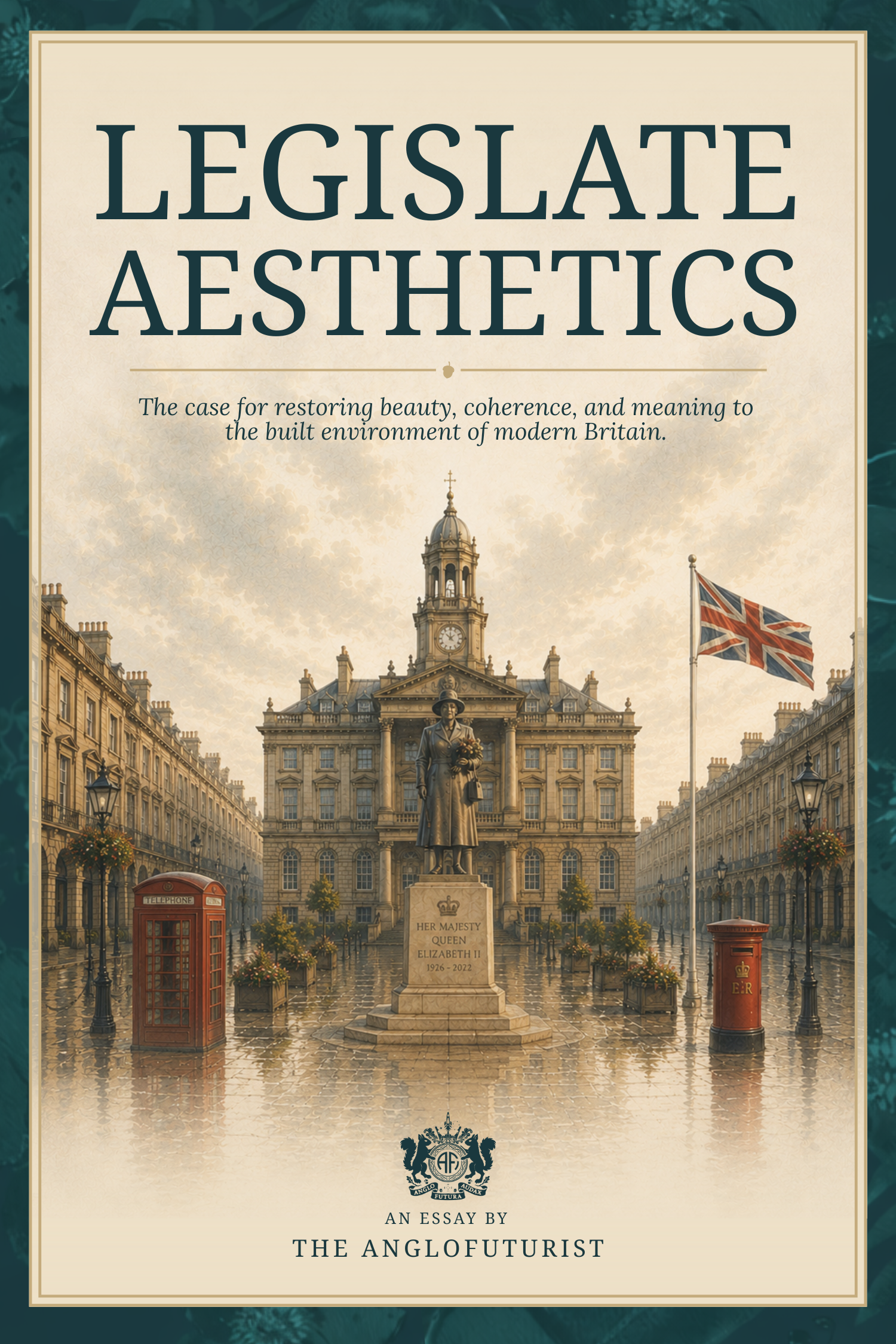

Sometime in the middle of the twentieth century, Britain decided that beauty was a private matter. Not formally, not in a single act or declaration, but cumulatively, through thousands of planning decisions, procurement contracts, and professional appointments, each one nudging the built environment a little further from what people actually wanted and a little closer to what the experts had decided was appropriate. The doctrine was never quite articulated. It didn't need to be. By the time anyone thought to challenge it, it had already settled into the foundations of every institution that shapes the physical country: the planning inspectorate, the highways agency, the architecture schools, the local authority design officers. Function was a public concern. Beauty was not. And the results are visible from any high street in England.
This essay argues that the doctrine was wrong, that its consequences have been serious, and that reversing it is straightforwardly possible. Beauty in the built environment is not a luxury. It's a precondition for civic confidence, a driver of economic value, and an expression of whether a country thinks its future is worth building well. Britain has been building it badly for sixty years. The tools to stop doing so are already available. What's been missing is the political will to use them.
The clearest evidence of how badly the system has failed came not from a critic but from the profession itself. RIBA's surveys, conducted across multiple years, found consistently that fewer than one in five members of the public trusted architects to design homes they'd want to live in. The figure among architects asked the same question about themselves was the inverse. A publicly licensed profession, exercising publicly delegated powers over decisions that affect every person who lives or works near them, was producing outcomes that four in five of the people affected would not choose. The Building Better Building Beautiful Commission, in its final report in 2020, identified why: the planning system had been structurally designed to exclude public preference from the outcome. Aesthetic objections to development were routinely dismissed by planning inspectors as subjective, while professional opinion was treated as objective. The subjectivity was always there. It was just being exercised by someone other than the people who had to live with the result.
Roger Scruton, who chaired the Commission until his death in 2020, had been making this argument since The Aesthetics of Architecture in 1979, and had spent four decades being dismissed for it. His point was never sentimental. Architecture is public in a way that painting isn't. You can close a gallery. You can't opt out of the built environment, and the built environment has measurable effects on the people within it. Colin Ellard's environmental psychology research at the University of Waterloo found quantifiable stress responses to featureless, undifferentiated facades. The Lancet published a 2016 study demonstrating statistically significant mental health benefits from urban green space and visual complexity in residential environments. The case for taking aesthetics seriously in public policy isn't a cultural preference dressed up as an argument. It's grounded in evidence that has been available to policymakers for years and has been largely ignored.
The reason it's been ignored is professional, not political. The architecture and planning professions absorbed modernism not as a style but as an ethic: the belief that ornament was dishonesty, that historical reference was nostalgia, and that the public's preferences were essentially a problem of insufficient education. That belief has been wrong in theory and disastrous in practice. The Hulme Crescents in Manchester, completed in 1972 to a design praised by every relevant professional body, were demolished in 1994. The residents had been describing them as uninhabitable for most of the intervening twenty years. The profession's response, when faced with evidence of this kind, has consistently been to blame the residents.
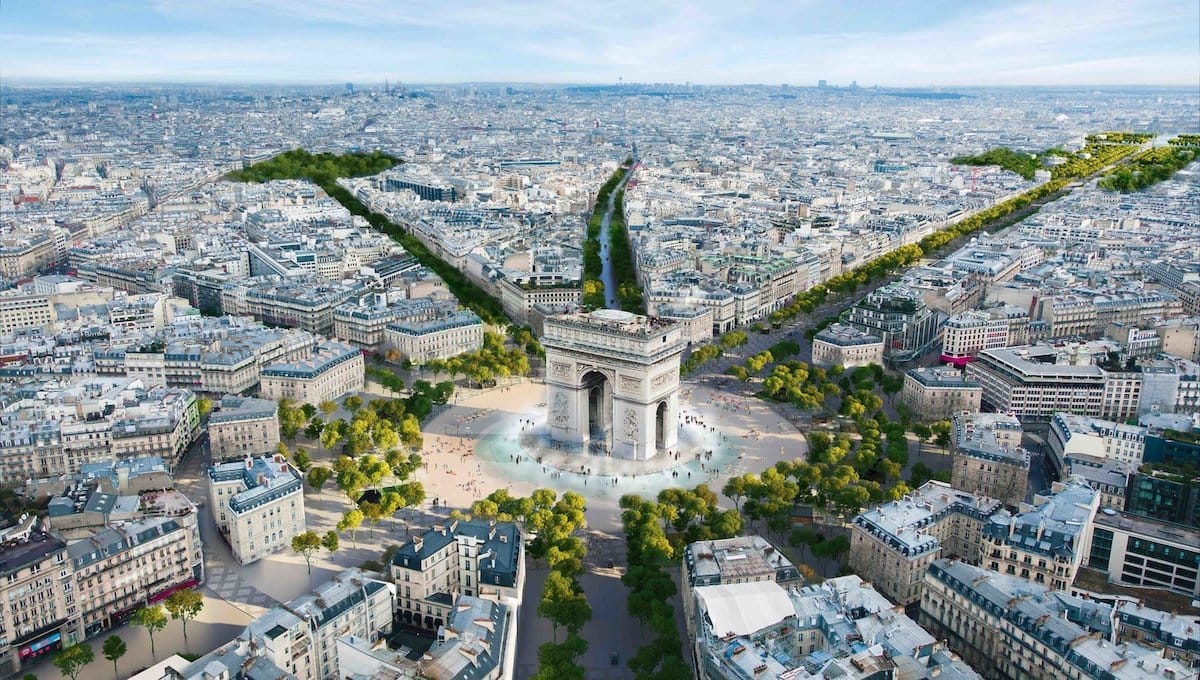
What would it look like to reverse this? Not a ministry of taste issuing decrees from Whitehall, and not a nostalgic freeze on development. The French model is more useful than either of those caricatures. The Architectes des Bâtiments de France are local officers with statutory powers to review development in protected zones, working within national standards but exercising local judgment. The result is that the Loire Valley still looks like the Loire Valley, Montmartre still looks like Montmartre, and both have absorbed substantial development pressure over the past fifty years. The principle isn't that nothing changes. It's that change has to justify itself aesthetically, not just economically.
Britain's equivalent, the Office for Place established under the last government, was advisory rather than statutory, chronically underfunded, and abolished before it had time to do anything. What's needed instead is a National Design and Aesthetics Commission with genuine statutory powers over major public infrastructure, backed by mandatory Aesthetic Impact Assessments for all significant public development. This isn't a radical proposal in international terms. It's standard governance applied to a domain Britain has treated as beneath its concern.
At the local level, the tools are even simpler. Heritage Building Codes for new residential development, requiring reference to local vernacular in materials, proportions, rooflines, and fenestration, could be inserted into the National Planning Policy Framework without primary legislation. Poundbury in Dorset has been operating on something like these principles for thirty years, and it has spent that time vindicating them. It sells. It attracts premium prices. It produces streets that people describe, unprompted, as pleasant to walk down. Léon Krier published the theoretical framework in The Architecture of Community in 2009, but the evidence was already accumulating on the ground. The architectural profession's sustained hostility to Poundbury has never rested on evidence of failure, because the failure hasn't materialised. It rests on the same professional consensus that produced the Hulme Crescents, and it deserves about the same weight.
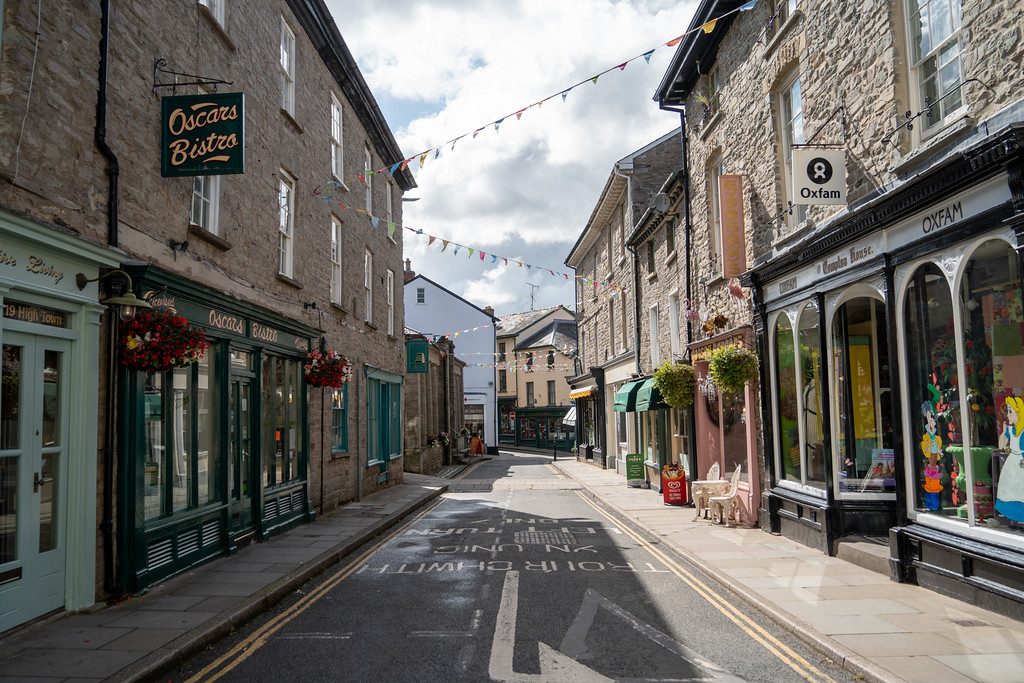
Shopfront codes work on an equivalent basis. Mandatory design standards for town centre conservation areas, governing fascia materials, signage lettering, window proportions, and colour palettes, already operate informally in Hebden Bridge, Hay-on-Wye, and Stamford. These aren't frozen museum towns. They're commercially active high streets with lower vacancy rates and higher footfall than comparable towns that dropped the standards. Painted timber fascias and individual lettering aren't merely more attractive than vinyl wrap and backlit plastic. They constitute a different kind of retail environment, one that draws visitors and sustains independent traders in a way that generic shopfronts don't. Charles Montgomery documented the relationship between streetscape quality and economic vitality across multiple cities in Happy City (2013). The evidence isn't new, the political will to act on it has just been absent.
The charge that any of this is elitist deserves a direct answer, because it's the charge that always comes first and is almost never examined. The current system is the elitist one. Expert opinion is imposed on communities who have no effective means to challenge it, producing environments that consistently diverge from what residents say they want. The RIBA surveys don't show public preference for glass and steel. They show preference for local materials, human scale, and buildings that look as if they belong where they are. Calling that preference reactionary is a way of refusing to take it seriously, which is what the profession has been doing for sixty years.
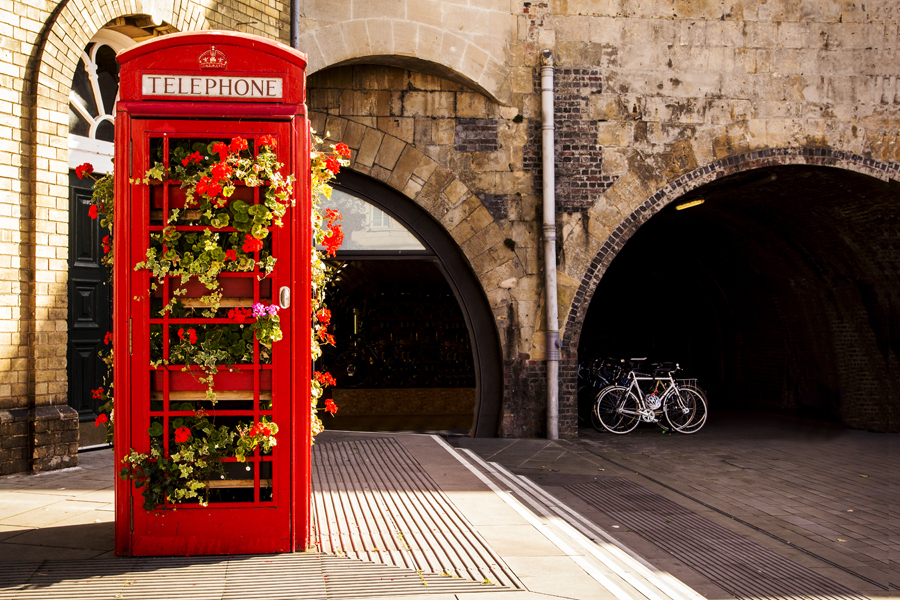
There's also an economic argument that should settle the question for anyone who finds the civic case insufficient. Heritage tourism in England generated £6.3 billion in visitor spending in 2019, according to Historic England. The red telephone box, administratively written off as obsolete in the 1980s, now appears in roughly half of all international promotional images of Britain. BT attempted a systematic removal programme. Local authorities resisted it and preserved tens of thousands. The economic intuition of the people doing the preserving turned out to be correct. The corporate strategy of the utility turned out to be wrong. This is not an unusual result when heritage is involved, but it runs so counter to the institutional instincts of British public administration that it has to be made explicit every time: old things that people love are economically valuable, and destroying them to save maintenance costs is not rational.
British Airways illustrated the same principle from the opposite direction. The 1997 World Images tail-fin scheme, replacing the Union flag with rotating panels of international folk art, was reversed in 2001 after sustained public ridicule. Margaret Thatcher reportedly made her view clear by draping a handkerchief over a model of the redesigned aircraft at a Conservative Party function. The flag went back. The episode is usually treated as a piece of political theatre, but it's actually a precise demonstration of the economic value of national visual identity: an asset so obvious that its removal reads, to almost every observer, as an act of institutional self-harm. British institutions have been committing versions of this act for sixty years, and the cumulative cost is not easily quantifiable but plainly enormous.
Railways are where the opportunity is clearest, because the contrast between what Britain has and what it could have is so stark that it's almost impossible to look at directly.
The British Rail design programme of the 1960s understood this. Gerry Barney's double arrow is still in use. The Rail Alphabet font was adopted by the NHS and later by the motorway signage system. The InterCity 125 was a genuine design achievement, recognisable and coherent, communicating something about the country that operated it. What replaced the programme was seventeen competing train operating company liveries, none of them memorable, most of them communicating nothing except the administrative complexity of the franchise system that produced them. The West Highland Line, the Settle-Carlisle, the Heart of Wales, the Cambrian Coast, and the Kyle of Lochalsh line carry passengers through some of the finest landscapes in Europe on Class 156 and Class 158 Sprinter units designed in the 1980s for suburban commuting. Nobody looked at those routes and then looked at those trains and thought they matched- because nobody was asked to.
However, Japan did. The Seven Stars in Kyushu, introduced in 2013, and the E001 Shiki-shima, introduced in 2017, were designed as complete aesthetic experiences: hand-lacquered interiors, bespoke ceramics, observation lounges calibrated to the landscapes they pass through. The commercial result was 31.9 million tourist visits to Kyushu's regions in 2019, generating ¥4.8 trillion in revenue. These aren't luxury trains in the sense of being irrelevant to the wider network. They're the visible expression of a principle that runs through Japanese public infrastructure: that the quality of the experience matters and that the state has a responsibility to design for it.

A designated British Scenic Rail Network, covering the twenty most visually significant routes, with a British Racing Green livery carrying regional heraldic variation and panoramic glazing on the most dramatic sections, would be commercially viable, culturally resonant, and achievable within a single parliamentary term. The Aesthetic Impact Assessment that should have been applied to the concrete rail bridge at Loughor on the South Wales Mainline, rebuilt in 2013 as a featureless grey slab forty metres from the Ribblehead Viaduct's living tradition of monumental stone arches, would have cost almost nothing to conduct. The difference in outcome would have lasted a century.
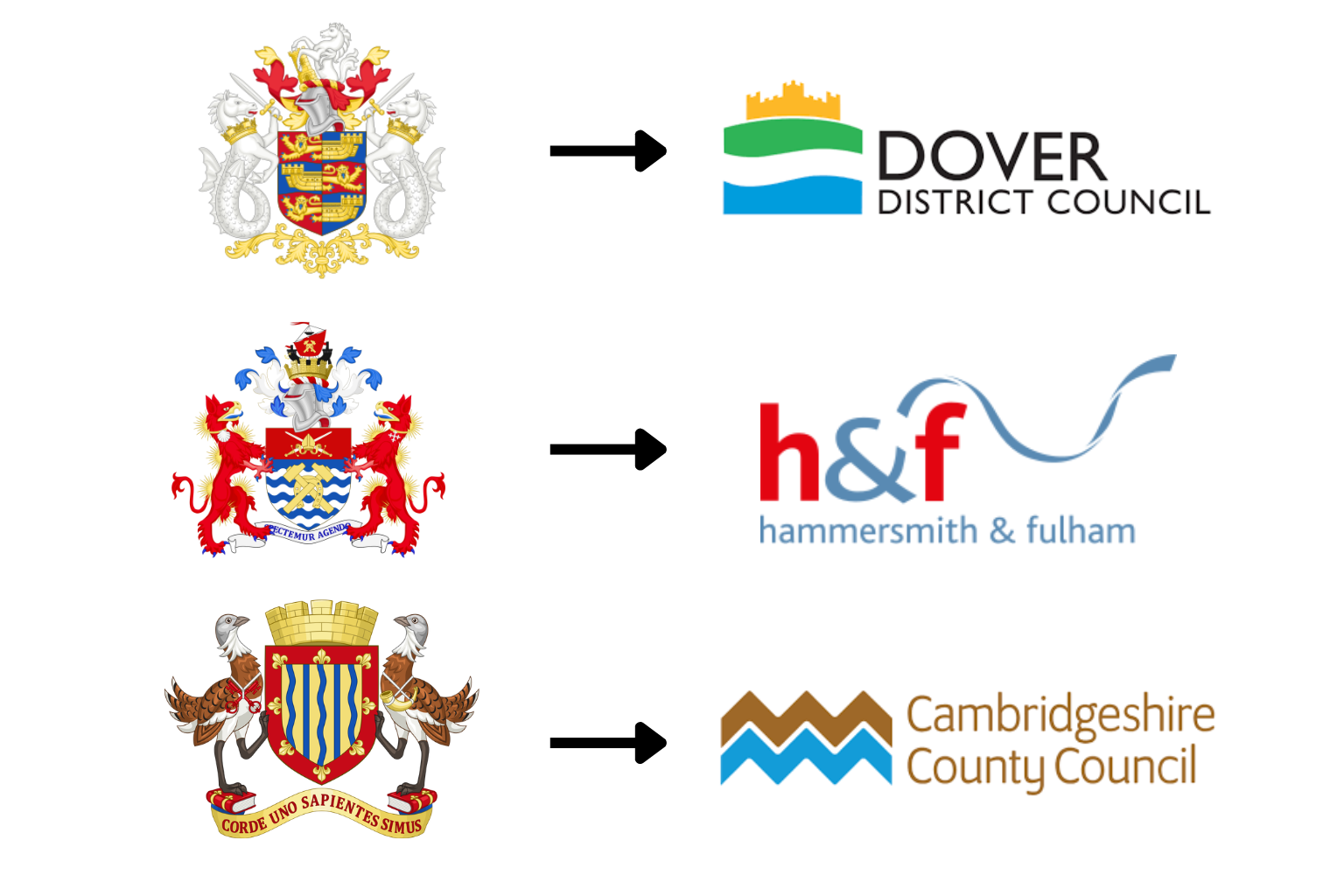
Local government visual identity is a smaller canvas but a revealing one. Between 1974 and the present, hundreds of British local authorities replaced historic heraldic identities with corporate logos commissioned from design consultancies that charged significant fees to produce work of breathtaking vacancy. The rebrand of Northamptonshire County Council in 2018, at a reported cost of £48,000, produced a coloured square with a sans-serif initial. The council was abolished by government order the following year, owing £70 million. The historic crest it replaced was a codified visual record of local history maintained by the College of Arms under a system of heraldic law older than the printing press. The College of Arms still holds all the records. Historic England has the statutory remit to administer a Heritage Visual Identity Register. The cost of restoring these identities to local government communications is trivially small relative to what was paid to remove them.
The same principle extends to the street itself. The Victorian municipal programme financed by the Public Works Loan Board produced visual consistency across British towns that is now recognisable as a distinct aesthetic tradition: fluted cast iron lamp posts, ornate drinking fountains, pillar boxes, bench ends bearing civic crests. The galvanised steel furniture that replaced it from the 1960s onwards was cheaper, standardised, engineered to a highways specification that contained no aesthetic requirement and produced no aesthetic result. Victorian lamp posts in Edinburgh, Bath, and central London have outlasted three generations of the standard-issue replacements. A national procurement standard requiring cast iron or equivalent heritage-quality street furniture, phased in over a decade, would begin to reverse the entropy at manageable cost.
Britain is not the only country to have recognised this problem, and the international precedents are more useful than the domestic debate because they've had time to produce results. The United States National Historic Preservation Act of 1966 established a Federal Historic Tax Credit that has, according to the National Park Service, leveraged $144 billion in private investment in historic properties. The National Register now lists over 95,000 sites. This was a Republican initiative under Lyndon Johnson's Great Society framework, sustained across every subsequent administration of both parties, because the economic returns made the ideological argument moot. Britain's Listed Buildings system protects what survives but shapes nothing that is built. Extending it into an active programme, a Scenic Infrastructure Programme identifying twenty rail routes and ten road corridors as aesthetic priority zones with design standards that require genuine ambition, would represent a meaningful shift in what the state believes public infrastructure is for.
The objection that always surfaces at this point is that beauty is subjective and the state can't legislate for it. The objection misunderstands how the state currently operates. Planning decisions are aesthetic decisions. Highway standards encode aesthetic outcomes. Public procurement determines what gets built and what it looks like. The state is making aesthetic judgments constantly, the choice isn't whether to make them, it's whether to make them well, transparently, in response to what people actually want, or badly, by default, in favour of whoever submitted the lowest tender.
Britain built the Forth Bridge, the Manchester Town Hall, the London Underground's Leslie Green stations, and the Routemaster bus. These were public commissions, produced by public institutions, shaped by people who believed that the quality of a thing's appearance was part of its function. They were also right in a way that time has confirmed: the Forth Bridge is a hundred and thirty-five years old and structurally sound, while the Tricorn Centre in Portsmouth lasted thirty-seven years before being demolished as an embarrassment. The Hulme Crescents lasted twenty-two. The lesson isn't that modern architecture always fails and traditional architecture always succeeds. The lesson is that when aesthetics are treated as irrelevant to the brief, the results fail in ways that are both predictable and expensive.
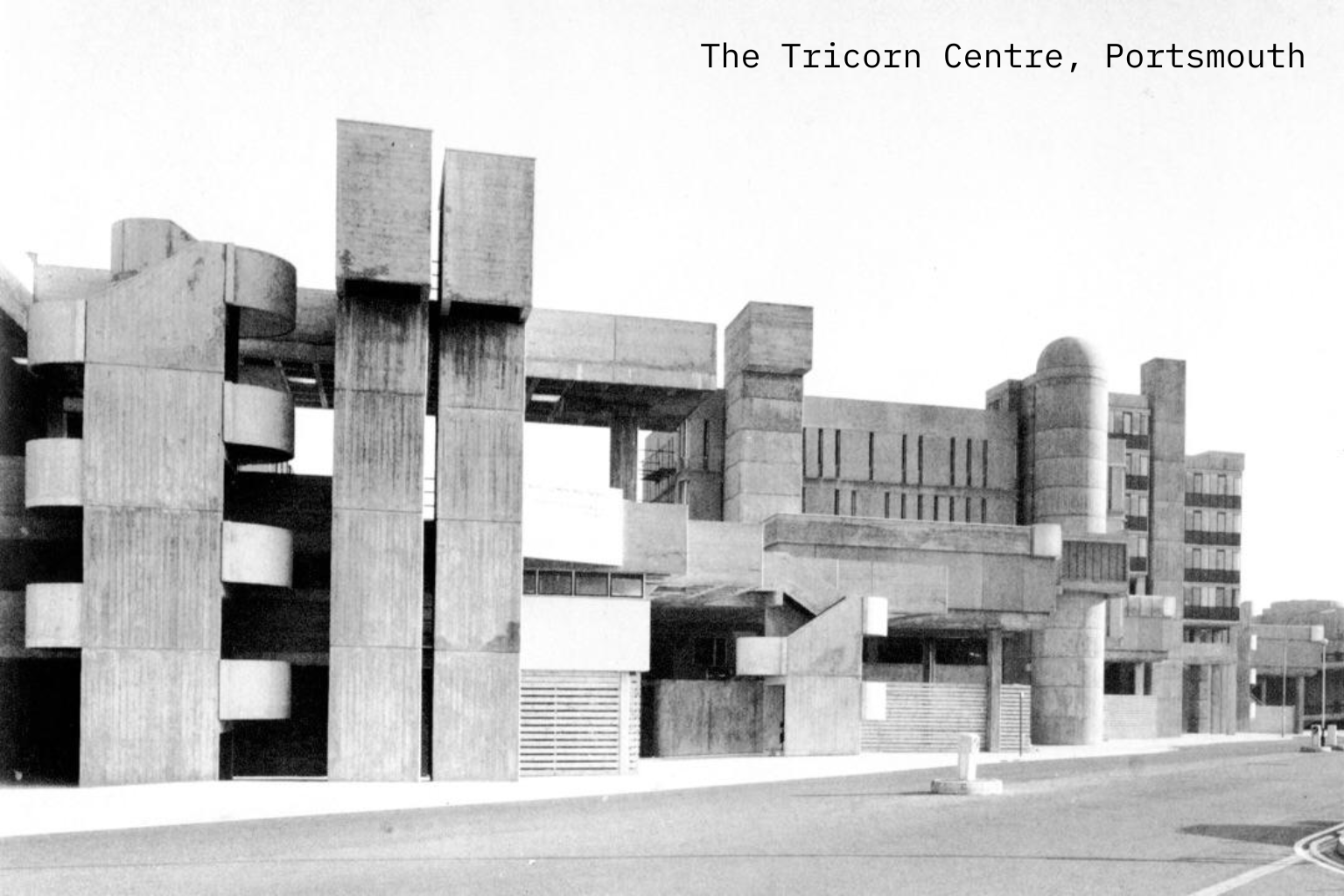
The doctrine that produced the Tricorn Centre is still largely in place. Its consequences are still accumulating. Reversing it doesn't require a revolution in public administration. It requires a decision that the appearance of Britain's towns, railways, streets, and public buildings is a legitimate concern of the people who fund them, and that the institutions responsible for shaping those things should be answerable to that concern. That decision has been deferred for sixty years. There's no good reason to defer it further.